What Makes Premium Sunglasses Different?
Two pairs of sunglasses can look almost identical — until you hold them. Here is a precise breakdown of what separates a premium frame from a budget one.
At first glance, two pairs of sunglasses might look almost identical. Same silhouette, similar colour, comparable price point, until you hold them in your hands. Then something shifts. The weight feels different. The hinges move differently. The lenses look different. And you find yourself wondering: what exactly are you paying for with a premium pair?
The answer is everything, but it is worth unpacking precisely what that means.
The Material: Acetate vs. Injected Plastic
The single biggest difference between premium and budget sunglasses is the material of the frame. Most affordable sunglasses are made from injected plastic, a manufacturing process where molten plastic is forced into a mould at high pressure. The result is lightweight and cheap to produce, but also prone to brittleness, fading, and warping in heat.
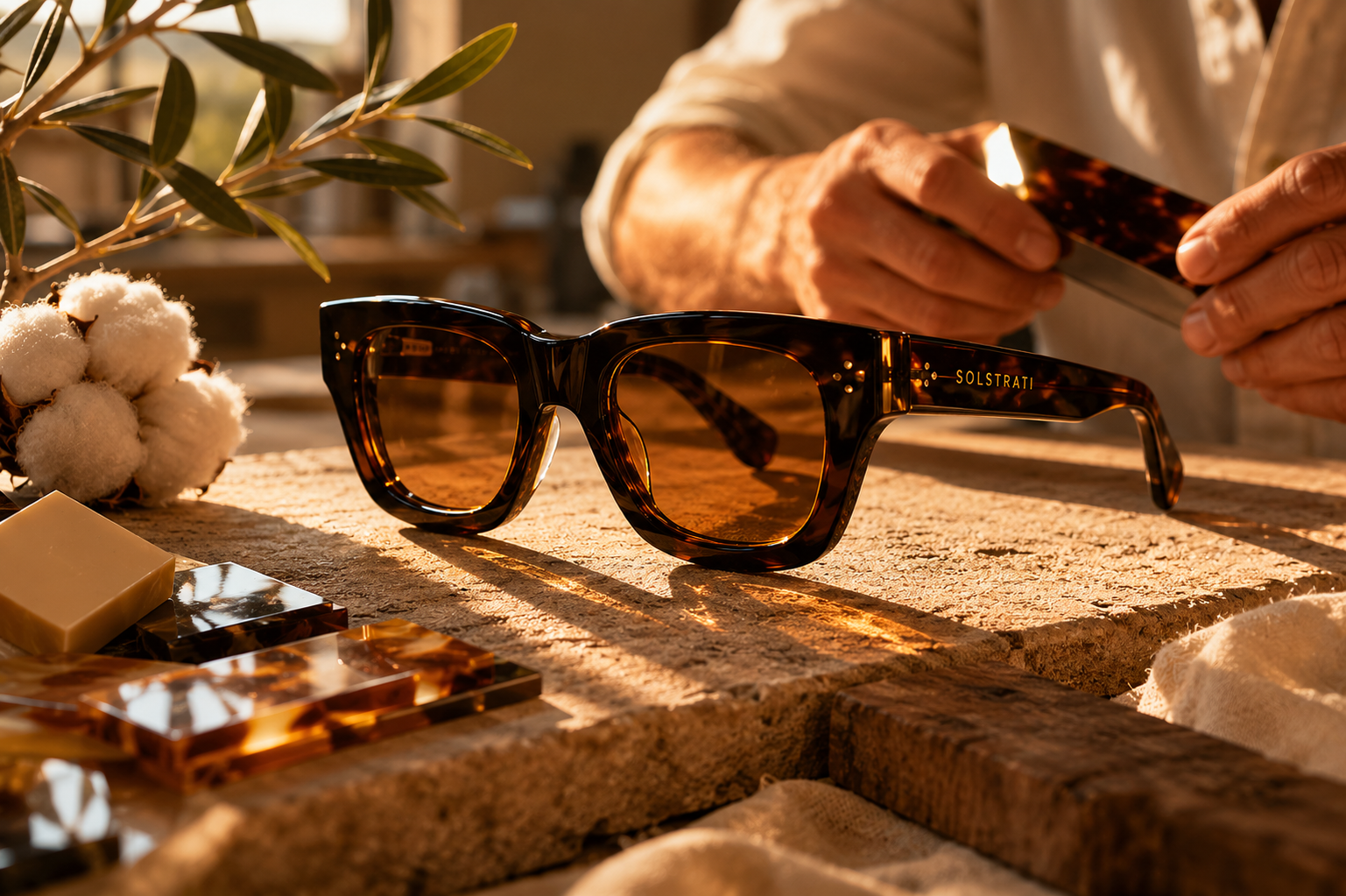
Premium sunglasses, including all Solstrati models, use acetate. Acetate is a plant-based material derived from cotton and wood pulp. It is denser, more flexible, and available in depths of colour and pattern that injected plastic simply cannot replicate. The tortoiseshell effect in an acetate frame has real visual depth: layers of colour pressed together. In plastic, it is a surface print.
The Lenses
Lens quality matters enormously and is rarely visible at first glance. Entry-level lenses are often made from thin plastic with a basic UV coating applied after the fact. Premium lenses have UV protection built into the lens material itself, along with optical clarity that reduces eye fatigue over long wear.
Look for category 3 UV400 certification, the highest standard for everyday sunglasses. This ensures that 99 to 100% of UV radiation is blocked, not just 95% as with some lower-rated lenses.
The Hinges
This is where the difference becomes tactile. Mass-produced sunglasses use simple rivet hinges that wear quickly and loosen over time. Premium frames use barrel hinges, often with five barrels, that are soldered and polished individually. When you open and close the arms of a well-made pair, there is a reassuring resistance: not stiff, not floppy, but considered.
The Finishing
A premium acetate frame is tumbled, polished, and sometimes hand-finished. Every edge is smooth. The colour runs all the way through the material, so scratches, when they happen, do not reveal a different colour beneath.
This attention to detail does not make a frame better in any single measurable way. But it makes the experience of wearing them completely different.
The Long View
A quality pair of sunglasses, properly cared for, will last years. A cheaper pair will often need replacing within a season: lens coating peeling, hinges loosening, arms warping. Over time, the economics of buying well become clear. But more than that: a pair of sunglasses you genuinely love wearing is simply more valuable than one you merely tolerate.